A Comprehensive Guide to Shade Sail Solutions for Different Outdoor Spaces

From balcony to courtyard, from dining area to children’s play area, this article explains how to choose and use them.
Before actually starting to create an outdoor space, many people underestimate one problem: the sun is much more “difficult” to deal with than you think.
It’s not the kind of problem that can be solved with a simple parasol; it’s more like glaring afternoon sun, strong UV rays, summer heat so intense you don’t want to go outside, furniture fading, and children not wanting to stay outdoors for more than 10 minutes.
It was only after experiencing several phases of “having a yard but not being able to use it” that I truly realized Shade Sail, this flexible shading solution, can almost be said to be a watershed moment for outdoor spaces.
This article will break down different outdoor spaces, discussing
which shading solutions are suitable for which spaces
, how to design them to be both aesthetically pleasing and practical
, and what details to consider when 90% of people make the wrong choice on their first try.
Why are more and more outdoor spaces choosing Shade Sail?
Let me start with a very real feeling:
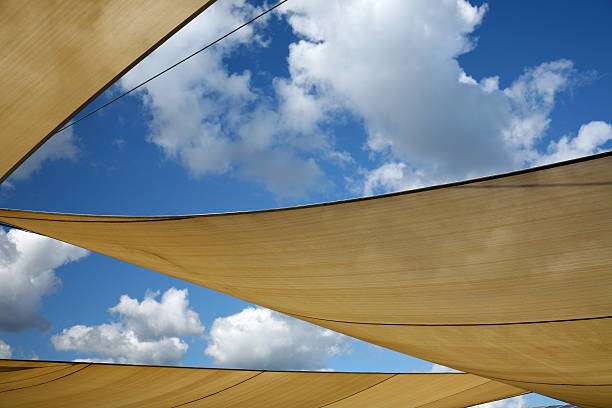
Compared to traditional parasols and fixed canopies, the “lightness” that Shade Sail gives you is on a completely different level.
Its core advantages are mainly concentrated in three aspects:
With a flexible coverage area and no fixed structural limitations, it offers a more open and airy feel without compressing the space. It can be flexibly adjusted according to seasons, angles, and spatial changes.
Especially those made of HDPE material, which has good tensile strength and breathability, are not prone to stuffiness, water accumulation, or aging even after long-term outdoor use.
Moreover, many designs nowadays are no longer just about “shading” but are directly integrated into the aesthetics of the entire space.
Balcony & Terrace: The Most Easily Overlooked Sunshade Solution for Small Spaces
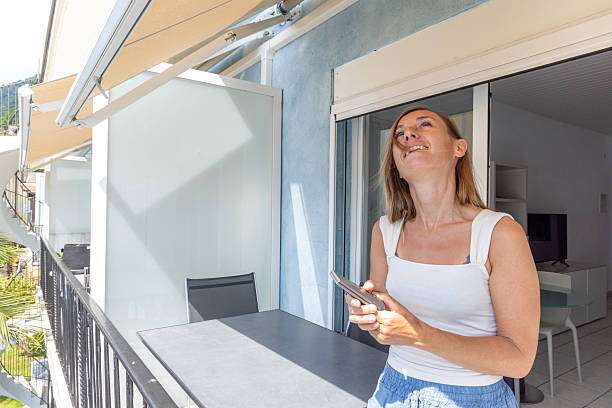
Apartment Balcony: Sun protection does not mean enclosure
Many city apartment balconies share a common problem:
They get intense afternoon sun, but people don’t want to install bulky awnings.
This type of space is ideal for triangular or small-sized shade sails.
Design ideas and suggestions:
One side is fixed to the wall, and the other side is connected to a railing or post, maintaining a certain angle of inclination to prevent rainwater from accumulating.
I tried it myself on a small west-facing balcony before. The most obvious change after it was installed was not that it was “cool,” but that the sunlight no longer shone directly into my eyes, and the whole space became more “comfortable to sit down.”
Rooftop Terrace: Needs Zoning More Than You Think
Rooftop spaces are often quite large but completely exposed to sunlight.
In this case, instead of trying to “shade off an entire area,” it’s better to use Shade Sail to create functional zones.
For example:
One area is covered by a lounge sofa, another by a dining area, with an open space in between, creating layers of light and shadow.
This approach looks more sophisticated and better meets practical usage needs.
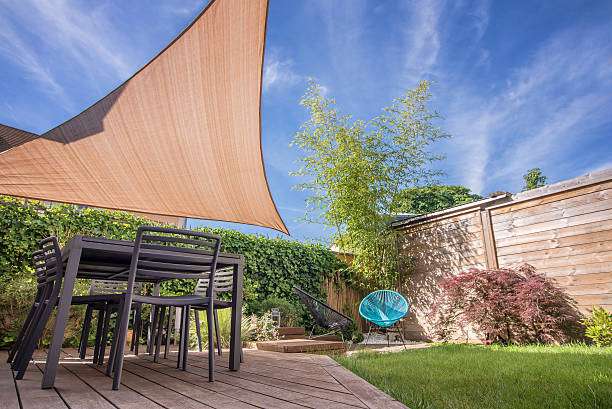
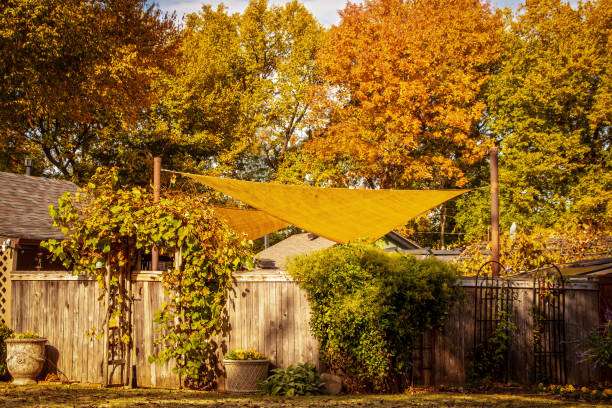
Courtyard & Garden: Shade Sail’s “Main Battlefield”
Family yard: It needs to provide shade and be durable.
For courtyard spaces where the installation is long-term and not frequently disassembled, the choice of materials is particularly crucial.
High-density HDPE shade sail is highly recommended here:
It has strong tear resistance, is not easy to fade, and is more friendly to humid and hot environments and long-term sun exposure.
Many people worry that this material might not be “good-looking enough,” but in reality, the color selection and weaving techniques are now very sophisticated. From a distance, it has a beautiful sense of line, and up close, it has a detailed and textured feel.
Garden relaxation area: Don’t let the plants get “tired” by the sun.
Some gardens don’t have the problem of “people being hot” in the summer, but rather the plants being exposed to the sun and becoming unstable.
One of the hidden advantages of Shade Sail is that
It filters strong light rather than completely blocking it.
This is actually more plant-friendly.
You can adjust the angle to allow sunlight in the morning and shade in the afternoon, creating a more natural light rhythm.
Outdoor dining area & BBQ area: Shade and a sense of security are both essential.
This is a detail that is often overlooked:
People are significantly more sensitive to light and temperature when eating.
Key design recommendations:
Ensure complete coverage, avoiding partial shade. Minimize low-hanging edges to prevent a feeling of oppression. Choose materials that block a high percentage of UV rays.
Especially in family BBQ areas, without shade, they can often only be used at night, drastically reducing their usage frequency.
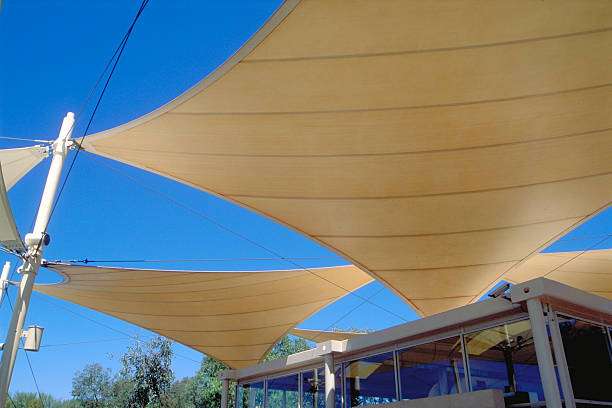
Children’s play area & pet area: It’s not as simple as “blocking the sun.”
If it’s a space where children or pets frequently spend time, the significance of Shade Sail lies more in safety and comfort.
Suggestions for children’s activity areas:
Choose a flexible, edgeless design to avoid the lowest point being too low, preventing collisions that could block strong sunlight during midday and afternoon.
Many parents find that after installing the system,
Their children are willing to spend significantly more time outdoors.
Application ideas for commercial and semi-public spaces
Cafes, guesthouses, poolside areas, and community public areas are all great places to use Shade Sail.
The reason is simple:
Short installation period, relatively controllable cost, and customizable style.
Moreover, from an operational perspective, a comfortable outdoor space is often more important than an extra table.
Five common pitfalls to avoid when selecting and installing a product.
1. Only considering size, ignoring the angle of the sun.
2. Ignoring the load-bearing capacity of the installation point
. 3. Choosing a non-breathable material, making it even stuffier in summer
4. The installation angle is too flat, causing rainwater to accumulate.
5. Neglecting long-term maintenance and weather resistance.
To be honest, I’ve seen almost all of these pitfalls and even fallen into one or two myself.
But the good news is—once you choose the right one, using it afterwards is really worry-free.
FAQ: Frequently Asked Questions about Shade Sail
Q1: Will the shade sail block the wind?
A: The high-quality material itself is a breathable structure, and it will not form a “wind wall” like a solid ceiling.
Q2: Can it be used on rainy days?
A: Yes, but it needs to be installed at a proper angle to avoid water accumulation.
Q3: Will it be difficult to install?
A: The basic model is actually simpler than you might imagine. You just need to plan the mounting points in advance.
Q4: Will the color fade quickly?
A: With high-quality materials, the fading rate is very controllable under normal outdoor use.
Q5: Is it suitable for long-term fixed installation?
A: If it is a weather-resistant design, it can definitely be used as a long-term solution.
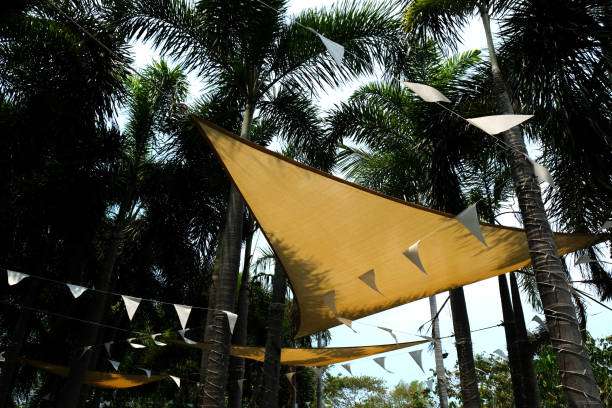
Summarize:
A good outdoor space is not about how big it is, but about whether you are willing to go out, sit down, and stay for a while.
a durable, attractive, and natural-looking shading solution for your balcony, patio, garden, or outdoor dining area, take a look at our curated Shade Sail collection.