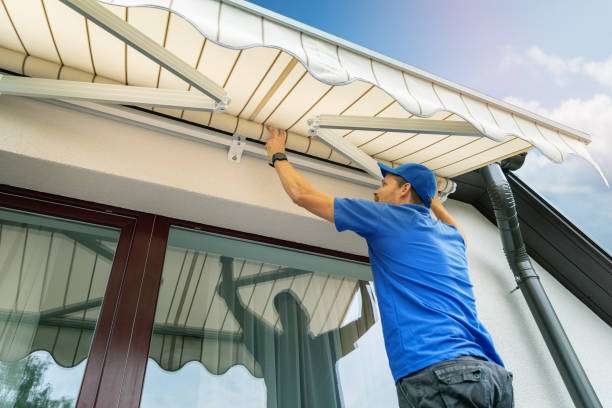

Before actually starting to decorate or renovate an outdoor space, many people’s understanding of shade sails is limited to one level: a sheet for shading from the sun.
But after seeing enough real-world installation examples, you’ll find that Shade Sail is more like a space design tool. It determines not only whether it’s “cool” or not, but also the overall atmosphere, frequency of use, and comfort of the outdoor area.
In this article, I will start with design inspiration and combine it with different real-world usage scenarios to talk about how Shade Sail can play a role in courtyards, terraces, swimming pools, and commercial spaces. I will also share some of my own real experiences in the process of purchasing and using it, hoping to give you some ideas that you can directly refer to.
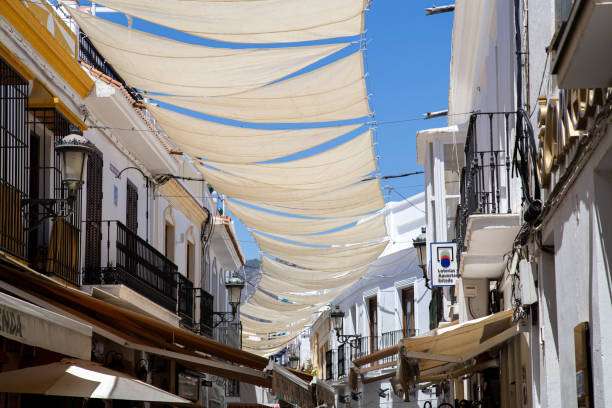
Why is Shade Sail becoming more and more of a “design element” than an accessory?
If you look back at outdoor sunshade solutions from over a decade ago, most of them were:
Large sun umbrella
Fixed awning
Heavy metal ceiling
These solutions are indeed practical, but they often share a common problem: strong visual impact, monotonous design, and low flexibility.
The popularity of Shade Sail precisely addresses these pain points.
1. Lightweight structure, yet with clearly defined spatial boundaries.
The shade sail itself is a stretched structure, which looks “light,” but it can visually divide space very clearly.
For example, a triangular can naturally distinguish between a “relaxation area” and a “passage area” without the need for solid barriers.
2. Shape itself is a design language
Rectangles, triangles, and irregular combinations of multiple pieces are inherently part of architectural language.
Many designers even determine the shape of the shade sail first and then work backward to design the furniture and circulation layout.
3. Practicality is no longer the only selling point.
People now choose not just for shade but for a range of reasons:
Does it affect the overall aesthetics?
Should the frequency of outdoor space use be increased?
Does it blend in with the house style and landscape design?
What are the sources of inspiration for Shade Sail’s design?
1. Nautical and Sailboat Structure: A Blend of Function and Aesthetics
The original inspiration for Shade Sail came from sailboats.
Cables, stress points, and tension surfaces are all extensions of nautical structures.
The advantages of this structure are
Strong wind resistance
Uniform force distribution
Visually dynamic
Many modern courtyards deliberately retain this “sense of tension,” making it the visual focal point of the space.
2. An extension of minimalist architectural style
In modern minimalist homes, it is often used to soften the perceived volume of a building.
Compared to a heavy canopy, it is more like a “floating shadow.”
The example I saw at a friend’s house was:
white building + dark gray shade sail + solid wood furniture. The entire outdoor area looked very clean and comfortable even without much decoration.
3. Abstract expression of natural elements
A shade sail is actually quite similar to a leaf blown by the wind or a cloud shadow.
Especially in a courtyard or garden, it can provide a soft shadow without obstructing the view.
This is why many garden designs choose light-colored, breathable shade sails instead of completely opaque structures.
How should Shade Sail be used correctly in different spaces?
Case 1: Backyard Recreation Area
Design focus: Comfort and Versatility
In a family backyard, the most common use of a shade sail is for covering:
Outdoor dining table
Barbecue area
Children’s activity area
In real-world cases, a relatively successful approach is
Not completely covering the entire backyard
Install the shade sail only above the “high-frequency activity zone.”
This preserves the sunny areas while preventing the entire space from appearing dark.
A little personal experience to share:
When I first installed a shade sail, I was greedy and wanted to “cover the whole area at once,” but it actually made my backyard feel a bit heavy. Later, I removed one corner, leaving a sunlit strip, and the space immediately came alive.
Case 2: Swimming Pool Area
Design highlights: Sun protection and visually lightweight
The pool area has two special requirements for Shade Sail:
It is necessary to effectively block ultraviolet rays
It should not affect the overall sense of openness.
Many high-scoring cases choose:
Triangle
Multi-point fixation
Segmented layout
This way, even if the shaded area is irregular, it won’t obstruct the entire pool space.
Case 3: Terrace and Balcony
Design focus: Maximizing space within a limited area
Shade Sail’s advantages are very clear when used on an urban terrace or balcony:
Does not take up space
Detachable
No impact on the original structure
Some residents use Shade Sail as a “portable roof,” pulling it up in the summer and retracting it in the winter, making extremely efficient use of space.
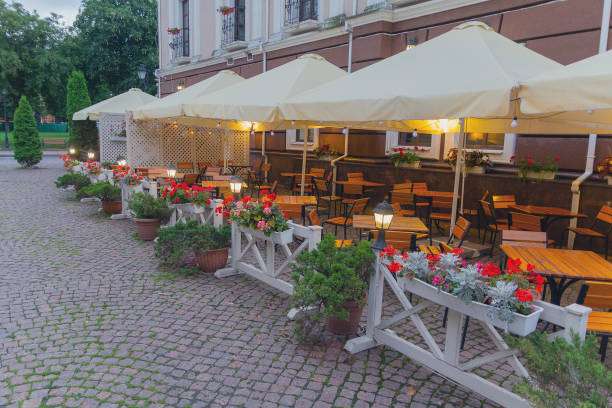
Case Study 4: Commercial Space (Café/Restaurant)
Design focus: Brand atmosphere + practicality
More and more cafes and restaurants are replacing traditional awnings with Shade Sails.
The reason is simple:
Lighter visual
It is easier to form a memory point
Photo friendly
In particular, by combining multiple Shade Sail sections, a very layered outdoor seating area can be created without increasing construction costs.
The most easily overlooked details when designing Shade Sail
1. Material determines the upper limit of the experience.
The key to a truly good shade sail isn’t its appearance but its materials.
High-quality HDPE material offers significant advantages in real-world use:
Tear Resistance
Not easy to fade
Anti-mildew and moisture-proof
It can effectively block most ultraviolet rays.
This is especially important if the shade sail is intended for long-term outdoor use.
2. Installation angle affects drainage and durability.
Sail shade isn’t simply about flattening it out.
A proper tilt angle can:
Prevent water accumulation
Reduce tension concentration
Extend service life
Many problems with products “sagging after use” are actually rooted in the installation design, not the product itself.
3. Color selection should be combined with ambient light.
Lighter colors are more transparent, while darker colors provide better light blocking.
If you live in an area with very strong sunlight, darker shades of Shade Sail will be noticeably cooler;
If you prioritize visual appeal and photography, lighter colors will be more flattering.
Is Shade Sail right for you? A simple guide to determining your needs.
You can ask yourself three questions:
Do I want outdoor spaces to be used more often?
Do I not want to install a permanent structure?
Do I care about the overall aesthetics of a space?
If the answer is “yes,” Shade Sail is almost certainly worth considering.
FAQ:
Q1: Is it rainproof?
The primary function of the shade sail is to provide shade. Some materials can provide temporary rain protection, but this is not the same as a rain shelter.
Q2: Will it be damaged by the wind?
With proper installation, the use of high-strength materials, and sufficient space for stress, it is very stable under normal use.
Q3: Does the shade sail require frequent maintenance?
No. High-quality materials typically only require regular, simple cleaning.
Q4: Is it suitable for small spaces? Yes,
It is very suitable, especially for spaces such as balconies and terraces.
Q5: Can I install it myself?
Most home scenarios can be installed by yourself, as long as you plan the fixed points in advance.
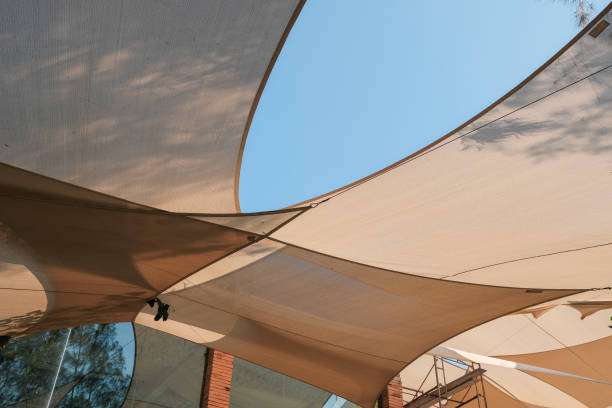
Summarize:
If you’re looking for a practical yet stylish outdoor shading solution, a shade sail is an excellent investment.
Our Shade Sail combines durability and aesthetics, making it suitable for patios, terraces, pools, and commercial spaces.