Shade Sail? A deep dive into its structure and principles, exploring how it can transform outdoor spaces.

In an increasing number of courtyards, terraces, balconies, parks, and commercial spaces, a seemingly lightweight yet highly functional outdoor shading method is being frequently adopted—shade sail.
Unlike traditional awnings that are bulky or the dotted coverage of parasols, it uses a “tension structure” to create a large, transparent, and well-designed shading space.
Many people have similar questions when they first encounter it:
Can it really block strong sunlight?
Why can something that looks like just “a piece of cloth” be fixed outdoors for a long time?
Is it safe in strong winds and heavy rain?
To truly understand these issues, we need to start with what a shade sail is and its structural principles.
What exactly is a shade sail?
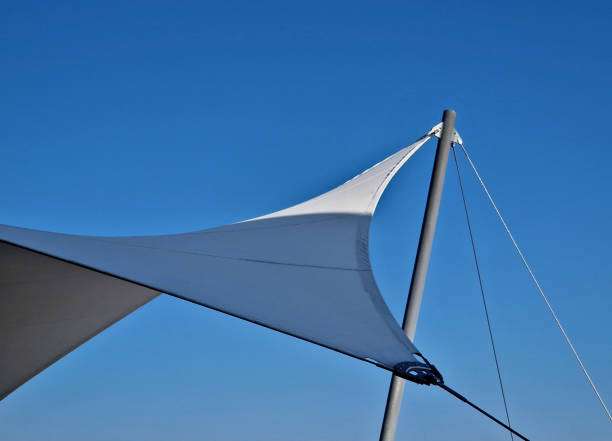
From a functional perspective, it is a tensioned covering structure used for outdoor sun shading, UV protection, and thermal environment improvement.
From a structural perspective, it is a flexible membrane system that relies on multi-point tension to maintain a stable shape.
Compared to common sunshade products, this type of sunshade has several very distinct characteristics:
It has a large coverage area and can cover a long distance.
Lightweight structure, does not rely on complex skeleton
Forms can be freely combined according to space
Combining functionality and aesthetic design
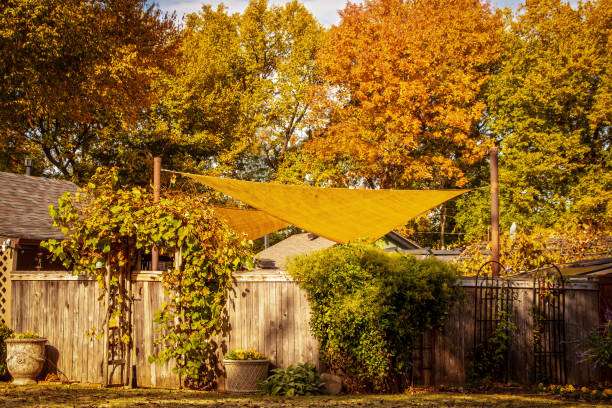
For this reason, this sunshade design has gradually been applied to places such as family courtyards, terraces, children’s activity areas, outdoor areas of cafes, and around swimming pools.
Shade Sail Core Structure
Although it looks “simple,” it is not just a piece of cloth hanging randomly but a stable system formed by the combined action of multiple key parts.
1. Main fabric
The main body is typically made of high-density polyethylene (HDPE) or specially coated fabric and has the following characteristics:
High tensile strength
Good breathability shade sail
Effectively blocks ultraviolet rays
It is not easy to age when used outdoors for a long time.
This material allows the shading system to remain lightweight and thin while still withstanding continuous tension and environmental changes.
2. Strengthen edge structure
High-quality designs will have the edges thickened, bound, or reinforced with stitching.
This is because the tension is concentrated at the edges, and if not properly treated, deformation or tearing can easily occur.
3. Corner connection point
Sunshade fabrics are typically triangular, quadrilateral, or irregular polygonal, with metal rings or reinforcing fasteners at each corner for connecting the cables.
These corner points are the “stress nodes” of the entire system, determining its stable deployment.
4. Cable and Fixing System
The cable is typically made of stainless steel or high-strength rope, with one end connected to the corner and the other end fixed to a wall, column, or special support point.
The cable’s length and tension are adjusted to achieve the desired tension.
Structural principle: Why can it hold up so firmly?
The true “core technology” does not lie in the materials themselves but in the principle of tension structure.
1. Tension balance, not load-bearing support.
Unlike traditional scaffolding that relies on rigid structural support, this design depends on the balance of tension at multiple points.
When the tension at each corner reaches a reasonable level, the fabric surface naturally forms a stable curved surface, and wind force and its own weight are evenly distributed.
This is why a shade sail is more stable in the wind, rather than swaying randomly.
2. Curved surface structure improves overall strength
The fabric is usually not stretched completely flat but rather forms a slight curve, which allows for:
Dispersed wind pressure
To prevent rainwater from accumulating
Improve overall resistance to deformation
From a structural mechanics perspective, this is a highly efficient design.
3. Breathable design reduces wind resistance
The fabric itself has a certain degree of breathability.
When the wind blows, some airflow will pass through, thereby reducing the “wind-catching effect” and reducing the impact on the fixed point.
How can we achieve both sun shading and cooling?
Many people are concerned about whether it can really lower the perceived temperature, and the answer is yes, and there is more than one way to do so.
1. Blocks ultraviolet rays
High-quality materials can block more than 90% of ultraviolet rays, reducing the risk of skin exposure and protecting outdoor furniture from fading due to sun exposure.
2. Reduce the accumulation of direct sunlight heat.
It blocks direct sunlight, rather than sealing off the air, so the air in the shaded area still circulates, making it more comfortable.
3. Improve local microclimate
In spaces such as terraces and courtyards, the heat retention effect of the ground and walls can be significantly reduced, making the entire area more suitable for long-term stays.
Structural differences in different forms
Different shapes result in different ways of being subjected to force:
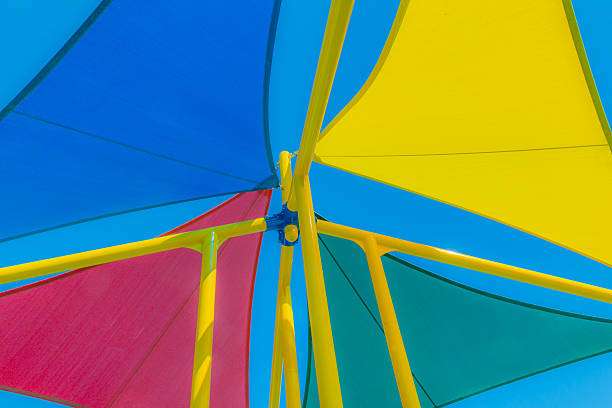
Triangle: Concentrated tension, flexible shape, suitable for use in small spaces or in combination.
Rectangular: Covers a large area but requires more precise fixing points.
Irregular: Emphasizes design aesthetics and requires more precise tension calculations.
Choosing the right form is an important prerequisite for ensuring long-term stable use.
Why is it becoming increasingly popular?
From a user perspective, the advantages are obvious:
Flexible installation, no need for large-scale construction
It can be disassembled and adjusted according to the season or needs.
Unobstructed views, making the space more open and airy.
Combining functionality and aesthetics
In many scenarios, this shade sail has become part of the spatial aesthetics, rather than just a sunshade tool.
Frequently Asked Questions (FAQ)
Q1: Is Shade Sail rainproof?
Its main function is sunshade. Some materials have a certain water-repellent ability, but it is not the same as a completely rainproof structure.
Q2: Is
Is a shade sail safe in windy weather? As long as it is installed properly and the tension is appropriate, it is safe under normal wind conditions. In extreme weather, it is recommended to temporarily disassemble it.
Q3: Does the shade sail require regular maintenance?
Regularly checking the cables and fasteners and keeping the fabric clean will help extend its lifespan.
Q4: Will it affect the lighting?
It blocks direct sunlight, so it won’t darken the space. On the contrary, it improves the problem of glare from strong light.
Q5: Shade sail—is it suitable for residential use?
It is very suitable, especially for semi-outdoor spaces such as balconies, courtyards, and terraces.
Conclusion:
Once you understand the structural principles, you’ll find that it’s not just a simple piece of fabric but a meticulously designed outdoor system.
Whether it’s improving the summer experience or enhancing the sense of space, this sunshade design offers a lightweight, flexible, and durable solution.
shaded sail for your patio, terrace, or commercial space, explore configurations tailored to your environment.
Choosing the right shade sail allows your outdoor space to truly become a long-lasting extension of your life.