Shade Sail vs. Other Shading Solutions: A Complete Comparison—Which Is the Right Outdoor Shading Option for You?

When creating an outdoor space, sun shading is almost an unavoidable step.
Whether it’s a courtyard, terrace, balcony, poolside, or outdoor café area, choosing the right sun shading solution can make a huge difference in the experience.
But then the questions arise:
Shade sail, parasol, awning, gazebo, fixed awning… which one should you choose?
They all seem to block the sun, but their prices, installation, lifespans, and user experiences are completely different.
In this article, I will start from real-world usage scenarios and put Shade Sail and common sun shading solutions in the same “experience comparison table.” I will not take sides or glorify it but simply help you determine which sun shading method is most suitable for you.
(I’ll also share some pitfalls I encountered myself, to help you avoid wasting money.)
There is no “best sun shading solution,” only the “most suitable” one.
When choosing sunshade products, many people’s first reaction is
Which one provides the best sun protection?
But in long-term use, you’ll find that sunshade is just the bare minimum; what truly affects the experience is actually:
Will it be stuffy? Will the heat dissipate?
Is it safe when it’s windy?
Does it need frequent collection and maintenance?
Can it adapt to irregular spaces?
Will it affect the overall aesthetics?
Shade Sail’s popularity isn’t because it’s “more advanced than all other solutions,” but because it strikes a perfect balance between cost-effectiveness, flexibility, and user experience.
What is a shade sail? Why has it suddenly become popular in recent years?
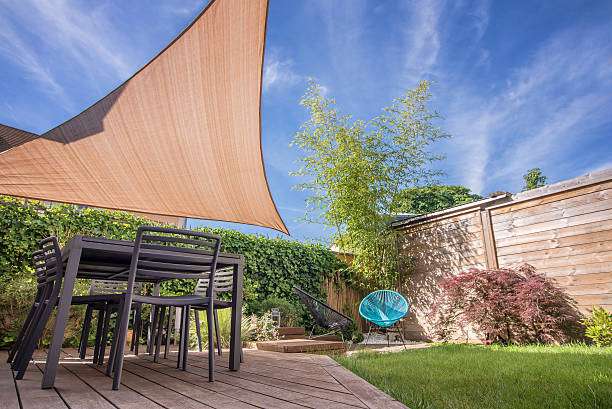
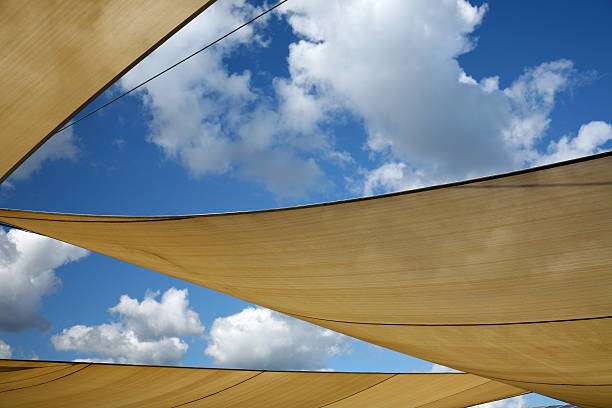
Simply put, a shade sail is a tensioned shading structure, commonly triangular or rectangular, which is fixed to a wall, column, or ground anchor point by steel cables or rings.
But unlike traditional cloth tents, its core advantage lies in
The high-density woven structure effectively blocks ultraviolet rays.
Breathable but not waterproof (or slightly waterproof), preventing heat buildup.
Modular installation, allowing for free combination and disassembly.
My first encounter with the Shade Sail was in a friend’s backyard. It was over 30°C at noon that day, but sitting under it didn’t feel like being “baked under a canopy,” which left a deep impression on me.
Shade Sail vs. Sun Umbrella: Which Is More Convenient?
Advantages of sun umbrellas
Installation is completely simple; just open and use.
Low prices and many choices
Suitable for temporary or small-area sunshade
The practical problems of sun umbrellas
It sways easily in a strong wind and can even be blown over.
The shaded area is limited, and the shadow will move with the sun.
The design of a central column often affects the activity space.
Shade Sail’s advantages
The stability is enhanced after fixing.
Can cover a larger area
Shadows last longer and require less frequent adjustments.
Who is it suitable for?
If you only sit on the balcony occasionally in the afternoon, a parasol is enough;
But if you want to create a “long-lasting outdoor space,” Shade Sail is more worry-free.
Shade Sail vs. Awning (Retractable Awning)
Advantages of sunshades
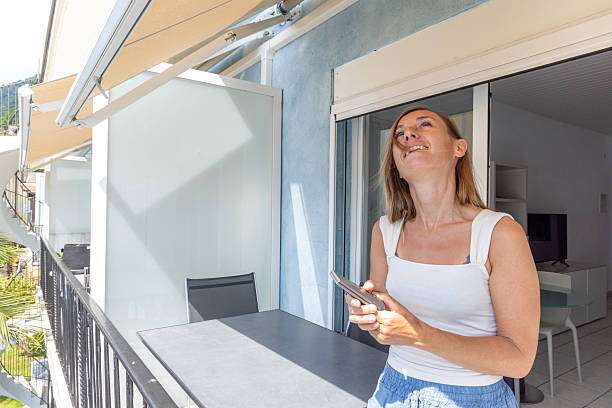
One-click retraction, easy to operate
The exterior is commercial and neat.
Stable sunshade effect
The pain points of sunshades
High installation cost and strict requirements for wall conditions
Complex structure, high maintenance costs
The failure rate is not low in windy and rainy conditions.
I once helped a small coffee shop choose a shading solution. They initially installed an electric awning, but it had to be repaired frequently due to wind damage and motor problems in less than a year, which actually affected their business.
Shade Sail’s Different Approaches
No mechanical structure, few potential points of failure
Wind is expelled through the fabric, providing better wind resistance.
Flexible installation methods, adaptable to irregular sites
Shade Sail vs. Gazing Pavilion/Fixed Awning: The Sense of Space Is Very Different
Features of gazebos & fixed canopies
Strong sun and rain protection capabilities
Strong sense of structure, high presence
More of a “building ancillary structure”
But the problem is
Visually, it can make the space feel cramped.
Poor ventilation, stuffy in summer
Once installed, it is almost impossible to adjust.
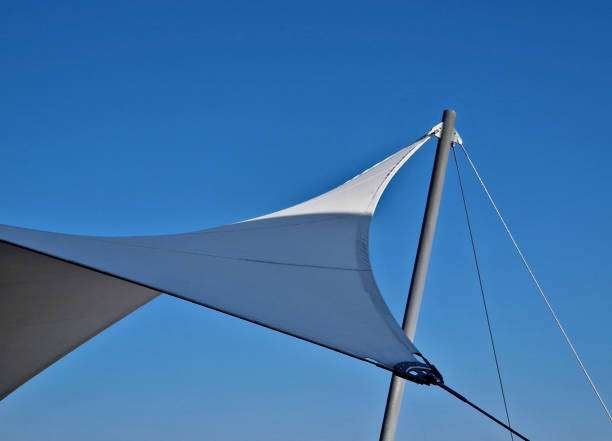
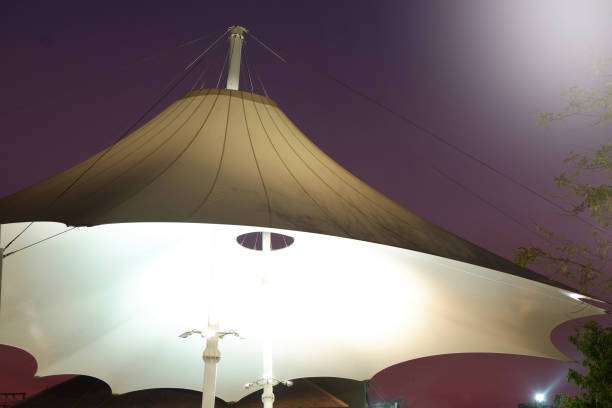
A shade sail’s advantage lies in its “lightness.”
Visually light and does not obstruct vision
Preserve the sense of sky and ventilation
More suitable for modern and minimalist-style courtyards
If you’re not looking for “complete rain protection” and are more concerned with comfort and aesthetics, Shade Sail is usually a better choice.
From a user experience perspective, in which scenarios is Shade Sail best suited?
After comprehensive comparison, Shade Sail is particularly suitable for:
Backyard, patio, poolside
Balcony, irregular outdoor space
Outdoor seating at restaurants and cafes
Temporary but frequently used shade areas
Its advantages are particularly evident when you do not want to damage the original building structure but still want a stable shading effect.
Key details that many people overlook when choosing a shade sail
To be honest, Shade Sail didn’t just “buy any random piece of cloth.”
What truly impacts the user experience are these things:
density
HDPE is needed to balance sun shading and breathability.
The edge reinforcement process
determines whether deformation will occur under long-term tension.
The installation tension design
is insufficient; it will collapse with a gust of wind.
A truly effective sunshade provides UV protection beyond just creating a visible shadow.
Should you choose Shade Sail or not? A one-sentence suggestion.
If what you’re looking for is
a comfortable, stuffy
space, flexible
installation, and
controllable long-term costs.
Therefore, Shade Sail is definitely worth considering as a priority.
FAQ: Frequently Asked Questions about Shade Sail
Q1: Is Shade Sail completely waterproof?
A: Most of them are mainly for sunshade. Light rain is fine, but it is not recommended to use them as a rain shelter in heavy rain.
Q2: Is it suitable for installation in windy areas?
A: If you choose the right material and tension it correctly, it will be more stable than a parasol.
Q3: What is the typical lifespan of a product?
A: Under normal use, a high-quality product typically lasts 3-5 years.
Q4: Is professional installation required?
A: The basic model can be installed by DIY, but professional installation is recommended for large areas or high-altitude installations.
Summarize:
If you’re looking to upgrade your outdoor sunshade space,
Take a look at our curated Shade Sail collection.
We use high-density HDPE material, which strikes a balance between sun shading, UV protection, and breathability, making it suitable for long-term use in both home and commercial spaces.
Make the right choice now, and every day of summer will be much more comfortable.