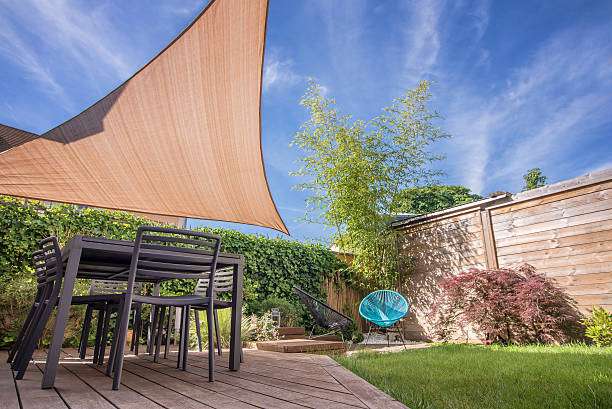

From material selection to installation details, install it right the first time, avoiding rework.
If you’re new to shade sail, it’s easy to underestimate its technological sophistication.
It may look like just a piece of fabric stretched out, but what truly determines the user experience is often not how good it looks, but rather whether the design is appropriate, the tension is adequate, and the details are carefully considered .
When I first installed a shade sail, I made a classic mistake: I bought the size based on the actual measured distance and installed it at the same height on all four corners. As a result, it sagged after the first rain and wobbled noticeably in strong winds. Later, after readjusting the height difference and tension structure, I truly realized that
A Shade Sail is not just something you “hang up,” but a complete outdoor tension system.
This article will start with “Is it right for you?” and explain step by step the selection logic of shade sail, key points of installation, and how to determine whether a product is really suitable for long-term outdoor use.
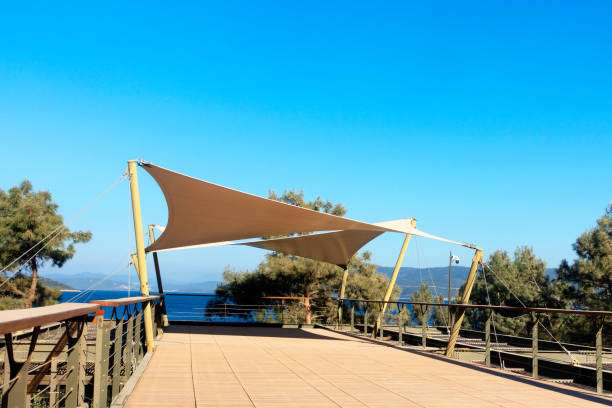
Is Shade Sail right for you? First, figure out your goals.
Before choosing shade sail, first confirm one thing:
what problem do you really want to solve?
Shade Sail primarily addresses the following issues:
Shading and cooling under strong sunlight
Lightweight shelter for large outdoor spaces
Design requirements to maintain ventilation and avoid compressing the space
It is not entirely the same as a canopy or gazebo ; rather, it is a solution that lies between functionality and design.
More suitable for Shade Sail scenarios
Courtyard, terrace, balcony, roof garden
Swimming pool, children’s activity area
BBQ area, outdoor cafe seating area
Places that need shade but don’t want an enclosed space
Not very suitable
Must be protected from rain around the clock
Sites where reliable anchor points cannot be provided
Extremely windy and unshaded environment
If your core needs are sunshade, cooling, and aesthetics , shade sail is usually a very suitable choice.
Shade Sail’s core principle: Why does “tension” determine everything?
Many people mistake shade sail for “cloth,” but it is actually a tension structure .
Its stability comes from three aspects:
The tensile strength of the canvas itself
Structural reinforcement of edges and corners
Continuous and uniform tension distribution
If any link in the chain fails, the following will occur:
Drooping in the middle
Swaying in the wind
Rainwater accumulation
Service life significantly shortened
Therefore, the selection criteria for shade sail is essentially about judging
whether it can maintain stable tension in outdoor environments over a long period of time.
Shade Sail Buying Guide: Price Isn’t What Matters
Material selection: The first step in determining durability
Among the most common shade sail materials on the market, HDPE (high-density polyethylene) is the mainstream choice for long-term outdoor use .
The reason is simple:
Strong tear resistance and anti-aging ability
It is not easy to fade after long-term exposure to the sun.
Not prone to mold
The structure is stable and suitable for withstanding continuous tension.
In practical use, I’ve found that a well-made HDPE shade sail often achieves a good balance between sun shading, protection, and breathability: it effectively blocks about 95% of UV rays, while the canvas itself maintains a good breathable structure, so sitting under it in summer doesn’t feel stuffy, and it doesn’t easily accumulate water when it rains. This material approach is actually very much in line with the long-term use logic of shade sail.
In comparison, while polyester is more affordable and offers a wider range of colors, it is less stable in long-term outdoor use and is more suitable for temporary or light-duty applications.
Shading rate and UV protection: Higher is not always better.
Many products emphasize “high light blocking rate”, but in actual use, it’s important to note that
being completely non-breathable does not necessarily mean being cooler.
Non-breathable canvas tends to accumulate heat.
Moderate breathability can actually lower the perceived temperature.
For family courtyards and leisure spaces, a balance between sunshade and ventilation is often more comfortable than simply seeking to block out light.
Shape selection: Stability takes precedence over aesthetics.
Common shapes include:
triangle
square
rectangle
Triangular structures are more stable and have better wind resistance, making them suitable for irregular spaces or combinations of multiple blocks;
square and rectangular structures have higher coverage efficiency, but also require higher tension and anchor points.
If it’s your first time installing, it’s better to choose a solution that’s of moderate size and easier to tighten than to blindly pursue a “large and comprehensive” solution.
How to choose the size? This is where it’s easiest to make a mistake.
An important principle:
The canvas size of the shade sail must be smaller than the actual installation distance.
Recommended reserve:
Tension adjustment space of 30–50 cm on each side
This is the only way to truly tighten the canvas using cables and tensioners, rather than just “barely hanging it.”
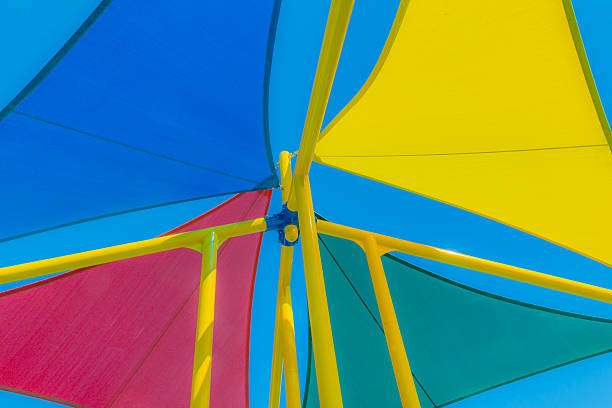
Edges and hardware: Many problems with inexpensive models lie here.
To determine whether a shade sail is suitable for long-term use, you can focus on the following:
Does it have thickened edging?
Are the stitches tight and neat?
Have the four corners been reinforced with multiple layers?
Does it come equipped with a stainless steel D-ring?
Under long-term tensile stress and outdoor conditions, corners and edges are often the first places to experience problems .
Before choosing a Shade Sail, it’s essential to distinguish between these two “completely different types of sunshade sails”.
Many misunderstandings about shade sail are not actually about the choice of materials, but rather about the installation method being confused .
From a structural perspective, shade sail can be divided into at least two categories—
their safety boundaries, wind resistance, and intended use are completely different.
One type: Shade Sail structural type capable of independently withstanding wind power.
The core characteristic of this type of shade sail is that
it is itself a complete tension structure system.
Common forms include:
Equipped with independent columns (steel columns/aluminum columns)
The column is fixed in the concrete foundation.
The canvas is held under continuous tension by cables and turnbuckles.
Its force path is clear and closed-loop:
Wind → Canvas → Cables → Columns → Foundation
In other words, the wind force is completely absorbed by the structural system, rather than being transferred to other objects .
This shade sail is closer to:
Outdoor tension structure
Semi-permanent outdoor facilities
Products with certain engineering attributes
Suitable scenarios include:
Courtyard, lawn
swimming pool area
Commercial outdoor space
Long-term fixed use of sunshade requirements
Only when the type is properly selected and the anchoring is in place can this type of shade sail “meet the prerequisites for discussing wind resistance”.
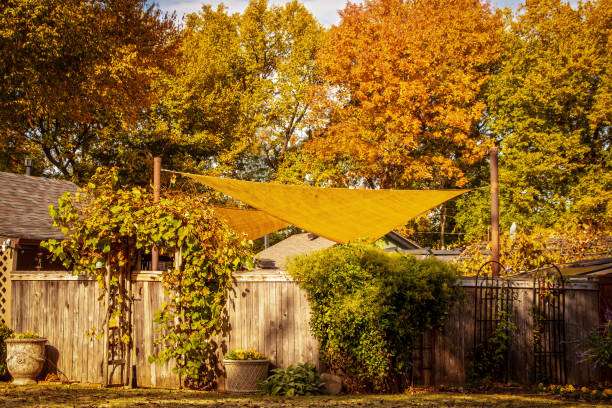
Attached Shade Sail (attached to other structures)
This is the most common type of product used by home users, but it is also the most easily misused.
It usually:
Hanging on walls, railings, wooden beams, fences
Not equipped with independent columns
Completely relying on the existing building as an anchor point
Structurally, it does not have the ability to independently withstand wind power .
Its force logic is actually:
Wind → Canvas → Hanging Point → Existing Building or Component
The problem is that
these walls, railings, and wooden structures were not originally designed for “long-term wind loads”.
Therefore, the correct positioning of this type of shade sail is:
Temporary or seasonal sunshade
Use in low wind environments
Can be disassembled depending on the weather
Instead of:
Strong wind areas are long-term fixed
Permanent outdoor structures
All-weather windproof facilities
Many claims that “shade shading is dangerous when it’s windy” are not due to poor quality of the shade sail itself,
but rather because “attached shading devices” are being used as “structural shading systems.”
A shade sail that can be embedded in the ground is a structure;
a shade sail that hangs on something else is merely a cover.
Or to put it more bluntly:
The former can “withstand the wind,” while the latter can only “avoid the wind.”
Why does this distinction directly affect material selection?
Once you understand the fundamental difference between these two shade sail types, the material issue mentioned earlier becomes very clear:
For structural shade sail,
it is better to choose breathable and fatigue-resistant materials (such as HDPE)
to allow the wind to “pass through” rather than “block” it.
The attached shade sail
is more suitable for low wind, detachable, and light-load applications.
Regardless of whether it is waterproof or not, it should not be regarded as a “windproof solution”.
This is why, in strong winds,
the risk of waterproof, densely woven shade sail is actually higher —
not because it is waterproof, but because it is not breathable and lacks structural support .
Shade Sail Installation Guide: Success or failure often lies in the details
Anchor point selection and load-bearing capacity assessment
Common anchor points include:
concrete walls
solid brick wall
steel columns
Anticorrosive wooden posts
It is important to note that the shade sail is subjected to continuous tensile force, not static weight , making the reliability of the anchor points crucial.
Height difference design: Prevents water accumulation and prevents sagging
This is a point that beginners often overlook.
suggestion:
At least two anchor points are higher than the others.
The height difference should be controlled at around 30–50 cm.
This allows:
Prevent rainwater from stagnating
Improve overall tension stability
It also has more visual depth.
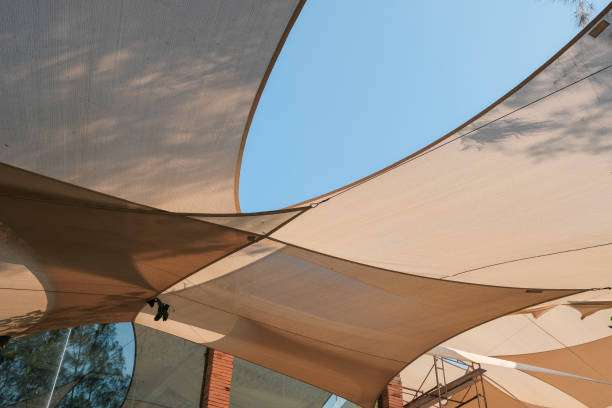
Hardware Selection: Don’t skimp on costs here.
Recommended use:
Stainless steel D-ring
Turnbuckle
steel cable or high-strength cable
Heavy-duty expansion bolts or chemical anchors
The canvas is replaceable,
while the anchor points and hardware are directly related to safety.
Recommended installation order
Determine and fix the anchor points
Install the highest point first
Diagonally fixed canvas
Adjusting the height difference
Gradually reduce tension
Check if the overall force is uniform.
Don’t tighten it to the maximum all at once; leaving room for fine adjustments is safer .
Usage and Maintenance: Making Shade Sail Last Longer
It can be temporarily disassembled in strong winds or extreme weather.
Regularly inspect cables and hardware.
Surface cleaning mainly uses water.
Storage and preservation during non-use seasons
With normal use and simple maintenance, a well-made shade sail can be used stably for many years .
FAQ
Q1: Will shade sail sag?
A: If the size is right and the tension is correct, it generally will not sag noticeably.
Q2: Can I install it myself?
A: Small sizes can be DIY, but for large areas, professional installation is recommended.
Q3: Is it unsafe in strong winds?
A: With proper selection of equipment and reinforcement of anchor points, it is usually safe.
Q4: Will it fade?
A: High-quality HDPE material fades very slowly.
Q5: Can multiple units be combined for use?
A: Yes, and combined designs are often more stable and aesthetically pleasing.
Summarize:
The real way to save money with shade sail is not by constantly replacing materials,
but by choosing the right materials, structure, and design details from the beginning .
If you are looking for a:
Made of high-quality HDPE material
Balancing high shading rate with good breathability
Edge reinforced, equipped with stainless steel D-ring
Suitable for various outdoor settings such as courtyards, terraces, and swimming pools.
Welcome to our website to learn more. We have already considered the material selection logic and installation friendliness in advance,
so that shade sail can return to its original state – beautiful, durable, and worry-free after installation.